The Real Starting Point: Stability, Not Just Functionality
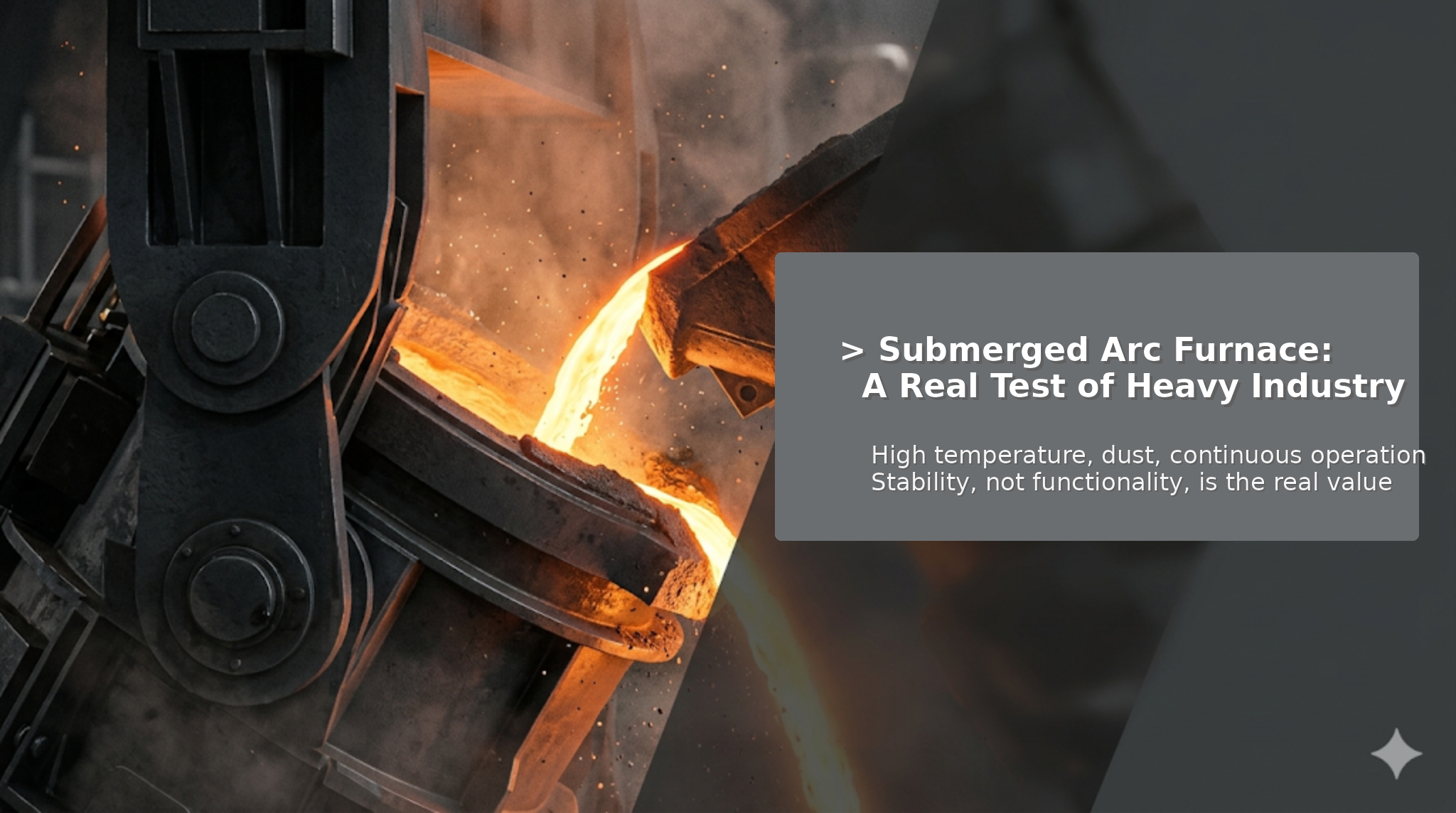
Submerged arc furnaces are a typical heavy-industry application. High temperatures, heavy dust, continuous operation, large equipment size, and numerous peripheral units make their automation requirements very different from those of general industrial machinery.
Once on site, what customers care about first is not how advanced the system architecture looks, but whether the products can truly adapt to the field environment and operate reliably over the long term. Whether installation is practical, connections are easy to understand, faults can be identified quickly, and maintenance or replacement can be carried out efficiently—these factors often matter far more than simply achieving the required functions.
In the peripheral systems of a submerged arc furnace, cooling, hydraulics, lubrication, auxiliary mechanisms, and distributed feedback points together create the real automation challenge. The clearer these device-side nodes are organized and the more logically they are deployed, the easier the overall solution is to implement successfully.
Why Are IP67 Field-Level Products So Important?
The Critical Nodes Are Often Located in the Harshest Areas
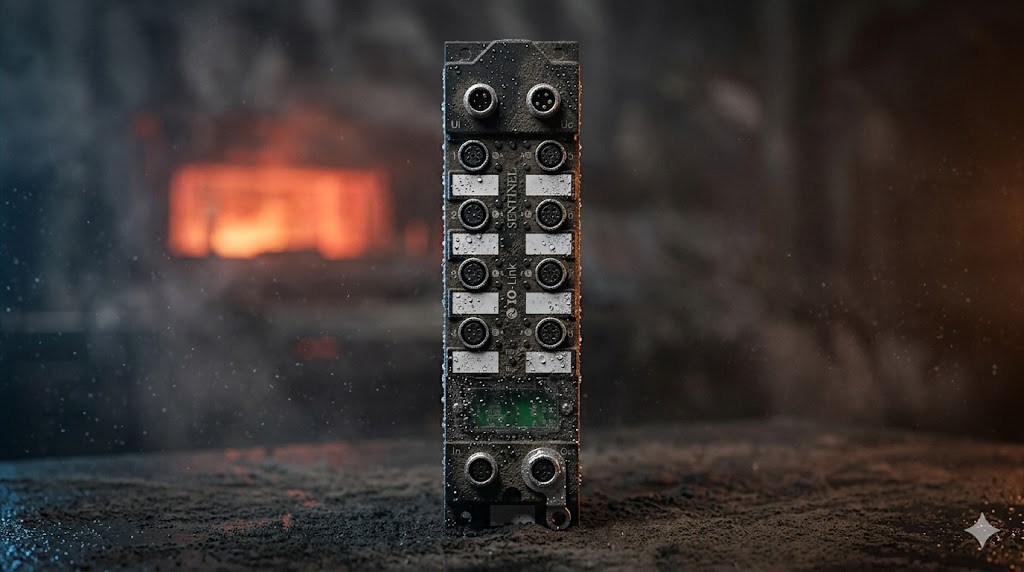
In many submerged arc furnace projects, critical data acquisition points are not located inside relatively protected control cabinets, but much closer to the equipment itself. These positions are often exposed to dense dust, moisture and condensation, high-pressure washdown, severe vibration, and large temperature fluctuations.
For masters, I/O hubs, and sensors installed in these areas, the first question is not whether they can be connected to the system, but whether they can continue to operate reliably in the field over time. If front-end nodes do not have sufficient protection and environmental adaptability, stable acquisition, transmission, and control become difficult to achieve in practice.
This is exactly why submerged arc furnace peripheral systems place greater value on structural reliability, installation suitability, and long-term operational stability—not simply on the number of available functions.
What Harsh Field Conditions Really Mean
Sentinel’s IP67 field-level products, for example, are designed to maintain stable operation even under extreme conditions such as water immersion or freezing. This is not just about achieving a protection rating—it is a demonstration of structural reliability under changing and demanding environmental conditions.
For heavy-duty applications such as submerged arc furnaces, only when front-end nodes themselves are robust enough to withstand moisture, condensation, washdown, and environmental fluctuations can the downstream processes of data acquisition, transmission, and control truly remain stable. The value of this type of product lies in providing a stronger and more reliable foundation for the entire signal chain.
Clear Wiring Matters More Than Function Stacking
The Real Challenge of Distributed Signal Points
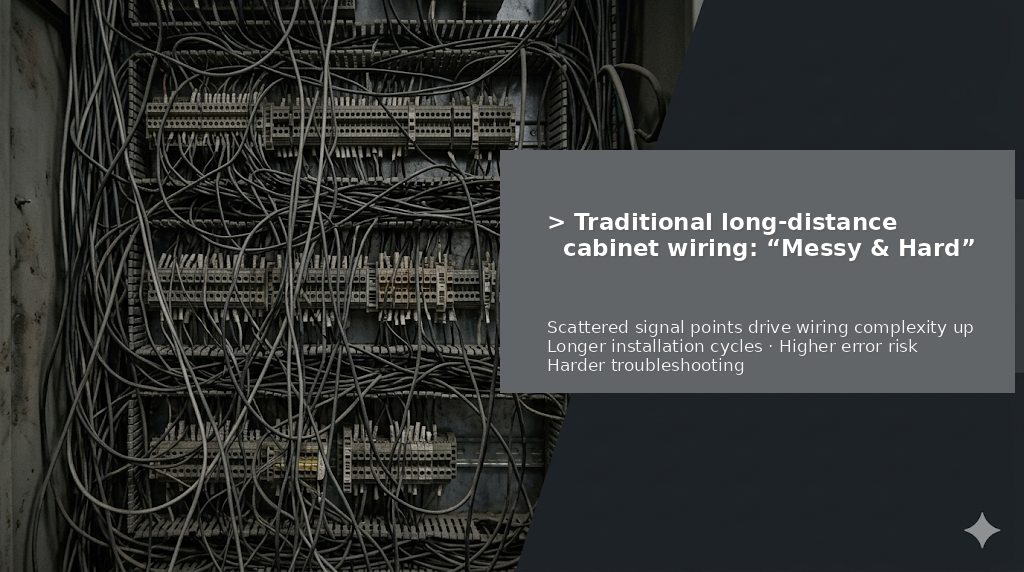
One typical feature of submerged arc furnace peripheral systems is that signal points are widely distributed and belong to multiple subsystems. The cooling circuit is one system, hydraulics and lubrication form another, while auxiliary mechanisms and status feedback points may belong to yet more separate sections.
If all signals are routed back to the control cabinet over long distances using traditional methods, the required functions can still be achieved. However, as the number of points increases, wiring complexity rises sharply. Installation becomes more time-consuming, the risk of wiring errors increases, and troubleshooting becomes far more difficult. When faults occur, finding the root cause takes longer. Even worse, later modifications can affect the entire system, driving up both time and cost.
The Real Value of IO-Link
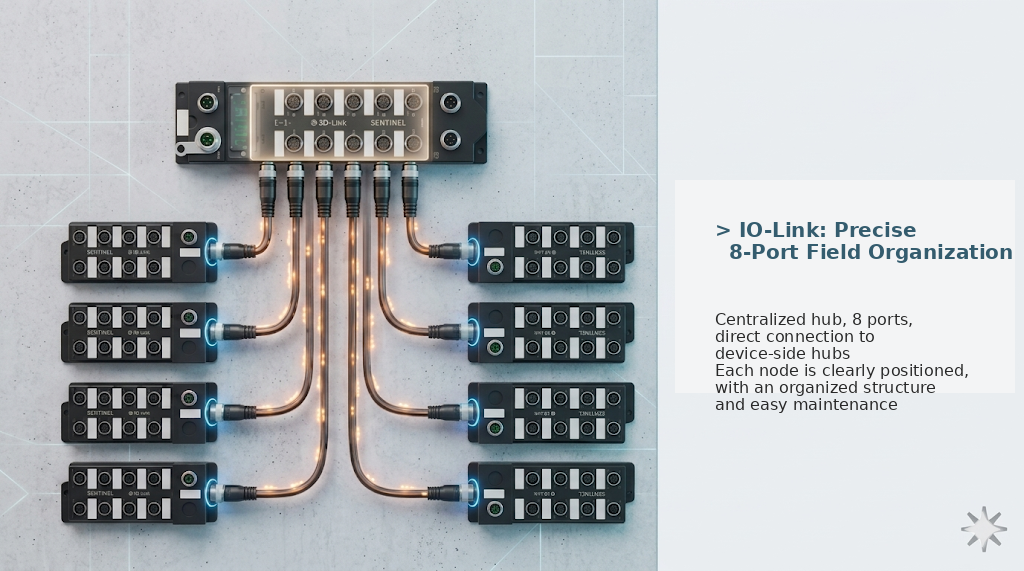
In applications like this, the value of IO-Link lies not only in communication, but also in how it helps organize the field side of the system. With device-side masters, hubs, and sensors, data acquisition can be moved closer to the actual installation points on the equipment.
More importantly, this approach makes signal paths clearer and more structured, with each connection easier to identify and manage. The wiring architecture becomes more organized, which not only reduces wiring effort but also improves maintainability. When expansion is required later, new points can be added more easily in suitable locations while keeping the system layout clear and manageable.
For submerged arc furnace equipment that runs continuously and offers only limited maintenance windows, orderly wiring is not just a convenience—it is a key factor in maintaining long-term system stability. The real value of an automation solution often lies not in adding more functions, but in making the field-side signal chain simpler, clearer, and easier to manage.
Maintenance Experience Shapes the Customer’s True Evaluation
A submerged arc furnace is not a system that is simply delivered and forgotten. Once it enters operation, customers continue to face demands such as rapid recovery from single-point failures, periodic preventive maintenance, adding new functions or detection points, and ongoing optimization and upgrades.
At this stage, whether automation products are easy to identify, quick to replace, and straightforward to restore often matters more than the initial functional demonstration. When front-end masters, hubs, and sensors use more standardized connection methods, on-site replacement becomes faster, recovery procedures become clearer, and future expansion can still maintain a structured layout.
This kind of “reduced effort in the long run” often determines how customers truly evaluate a solution. In the submerged arc furnace industry, where continuous operation is especially important, this becomes even more critical.
The Upgrade Direction That Truly Creates Value
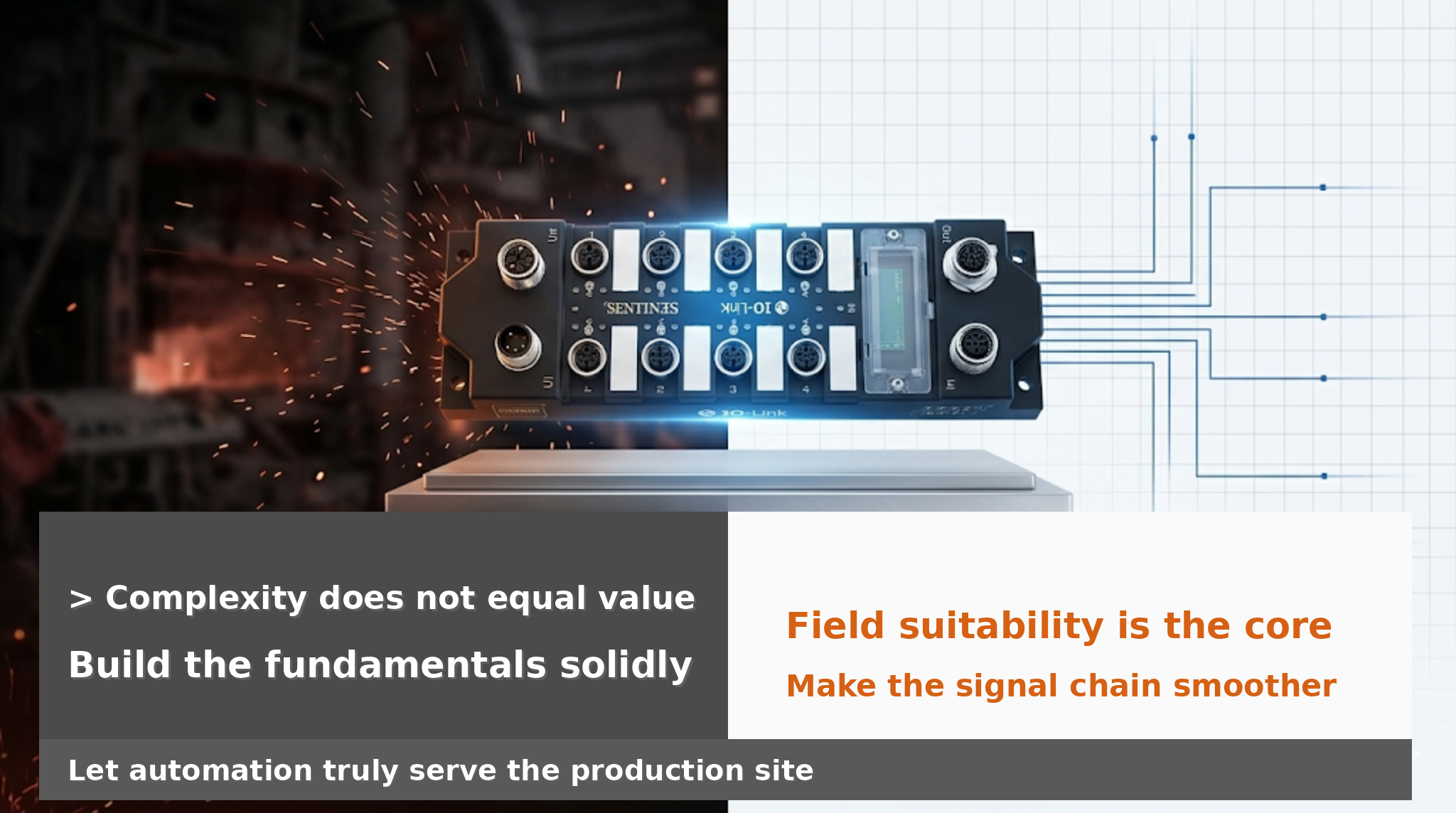
The submerged arc furnace industry certainly needs automation upgrades, but upgrading does not necessarily mean making everything more complex. In many projects, the most valuable improvements come from strengthening the fundamentals: using front-end products that are better suited to field conditions, creating cleaner and more structured device-side wiring, organizing nodes more logically, and making maintenance more efficient.
Some may ask why IP67 field-level products are particularly important in submerged arc furnace peripheral systems. The answer is simple: critical acquisition nodes are located on the equipment side, where they must face dust, moisture, condensation, washdown, and other demanding conditions. Front-end products must first meet the requirements for protection and structural reliability. Only when these nodes are truly fit for the field can stable acquisition, transmission, and control be achieved.
The same logic applies to IO-Link. Beyond communication itself, IO-Link provides a more effective way to organize and manage distributed field-side nodes. It makes scattered points easier to manage, wiring structures easier to understand, and maintenance and replacement more efficient. This is especially valuable in submerged arc furnace peripheral systems, where points are widely distributed.
In real applications, field-side masters, hubs, and sensors are often best deployed near distributed points around cooling systems, hydraulic units, lubrication units, and auxiliary mechanisms. These locations are usually far from the control cabinet, exposed to more demanding conditions, and involve different signal types. By moving acquisition closer to the equipment, the overall wiring structure becomes clearer and future troubleshooting and maintenance become much easier.
Complexity does not always create value. Suitability for the field does. Only when products can truly work in the field, remain reliable in the field, and continue serving the field does an automation solution deliver its full value.
FAQ
1. Why are IP67 field-level products especially important for submerged arc furnace peripheral systems?
Because many critical nodes are located on the equipment side rather than inside the control cabinet. In the presence of dust, moisture, condensation, washdown, and temperature fluctuations, products must first provide strong protection and structural reliability. Only then can stable acquisition, transmission, and control be achieved.
2. What is the main value of IO-Link in this type of application?
Beyond communication, IO-Link helps make device-side connections clearer, distributed points easier to organize, and future replacement, maintenance, and expansion more efficient. This is particularly important in submerged arc furnace peripheral systems with widely distributed points.
3. Where should field-side masters, hubs, and sensors typically be deployed in submerged arc furnace peripheral systems?
They are typically best deployed near distributed points around cooling systems, hydraulic systems, lubrication systems, and auxiliary mechanisms. These areas are often farther from the control cabinet, exposed to harsher field conditions, and involve more varied signal types. Field-side deployment brings data acquisition closer to the equipment, improves wiring clarity, and makes troubleshooting and maintenance more convenient.
Customer Support & Service
With 17 years of experience in industrial automation, Tianjin Sentinel Electronics has delivered more than 170 application cases across industries including rail transit, automotive manufacturing, and new energy. We provide full-cycle support from sensor selection and system integration to after-sales diagnostics.
If you would like to learn more about Sentinel products, please contact our sales team or call us at +86-22-83726972. You can also visit our official website at www.sentinel-china.com.
We welcome you to book an online demonstration or request a sample trial, and let our engineers tailor a complete solution for your application—from data acquisition to execution on site.