Why the More Valuable the AI Data Center, the More Critical the Liquid Cooling Field Layer
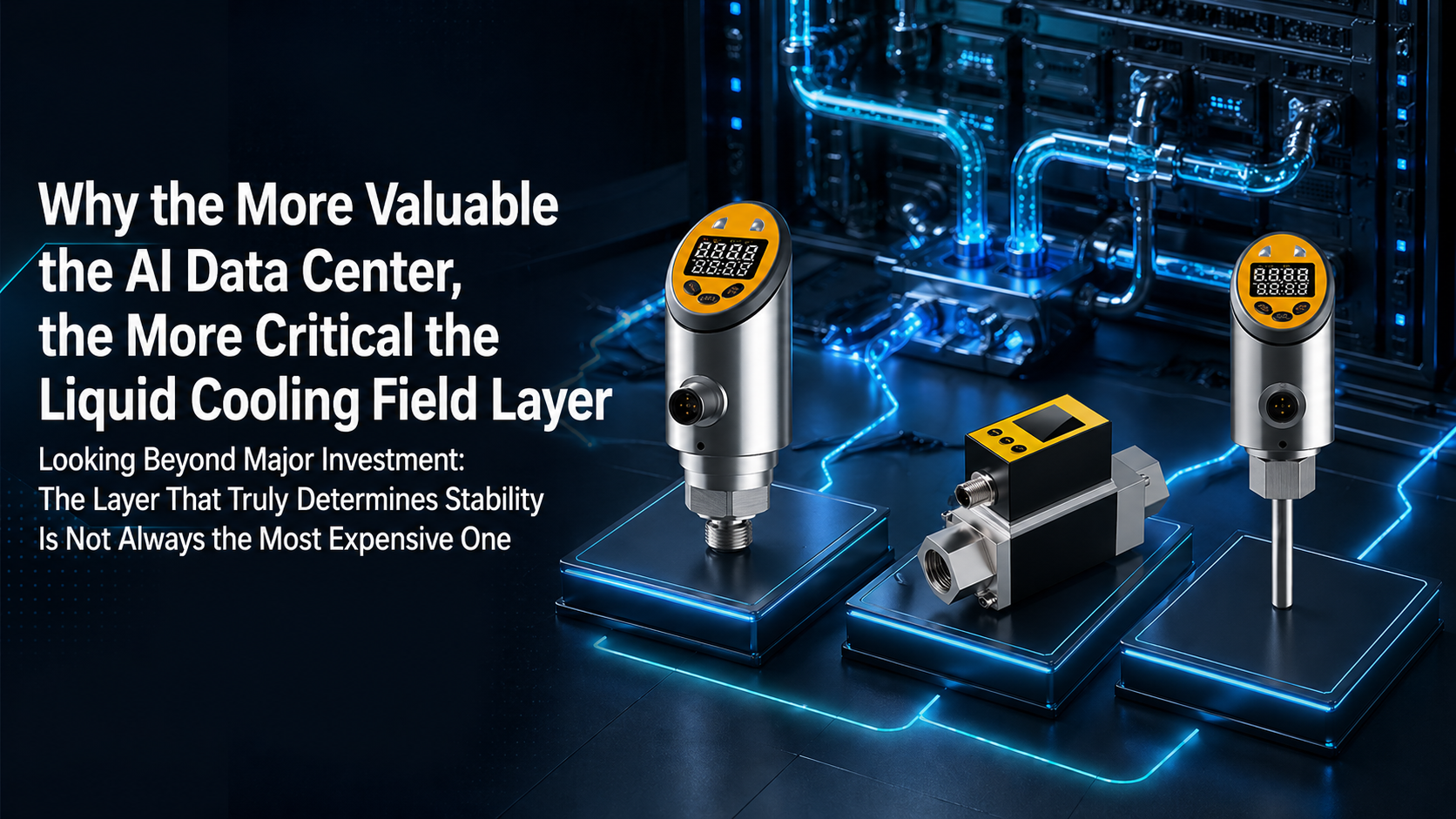
Looking Beyond Major Investment: The Layer That Truly Determines Stability Is Not Always the Most Expensive One
As AI data centers enter the era of high computing power, much of the industry discussion focuses on GPUs, servers, power supply, and civil construction. Capital expenditure continues to rise, rack power density keeps increasing, and requirements for system redundancy, continuous operation, and delivery cycles are all being pushed to a higher level.
At first glance, the most valuable part seems to be the upper-layer computing equipment. But from an engineering perspective, the more expensive the system is, the more concentrated the load becomes, and the higher the cost of downtime, the more the stability of the field layer should not be treated as a supporting role.
The reason is simple. What high-value systems fear most is not always a sudden major failure, but small deviations that look insignificant at the beginning and then become rapidly amplified under high-load conditions.
In a liquid cooling loop, a slight flow fluctuation, a filter that is gradually becoming clogged, or a pipeline section with slowly increasing resistance may not immediately trigger a shutdown alarm. However, when the system operates under high heat flux for a long time, these deviations may evolve from local abnormalities into reduced heat exchange efficiency, accumulated hot spots, and eventually affect the availability of the entire system.
This is why the competition in liquid cooling systems today is no longer just about “whether the coolant can circulate.” It is more about “whether cooling capacity can be delivered continuously, stably, and explainably.” Once the evaluation standard shifts from “running” to “running with certainty,” the importance of the liquid cooling field layer becomes much more significant.
What Liquid Cooling Systems Really Need Is Not Just Alarms, but an Explainable Operating Status
In the past, many projects approached the field layer in a result-oriented way: observe temperature, wait for alarms, and then troubleshoot.
This approach may still work when the load is low and the system complexity is limited. However, in high-computing-power scenarios, relying only on result indicators is becoming increasingly insufficient. This is because temperature abnormalities usually indicate that the problem has already developed for some time, rather than just started.
What matters more is to build a continuous and stable data chain from process variables such as pressure, flow, and temperature. Only in this way can the system move from “seeing the result” to “understanding the cause.”
Is the filter slowly becoming clogged? Is the pump operating condition beginning to deviate? Is there insufficient flow in a certain branch? Is the heat exchanger efficiency gradually changing?
These issues should not be judged only by experience after a failure occurs. They should be identified earlier through trends and handled in advance through maintenance actions.
In other words, the value of the field layer is not simply about installing more sensors. It is about giving the liquid cooling system an explainable operating language.
For high-computing-power data centers, this capability is not marginal. It is part of the system’s operational capability itself.
Why High-Value Systems Need to Take Small Signals Seriously
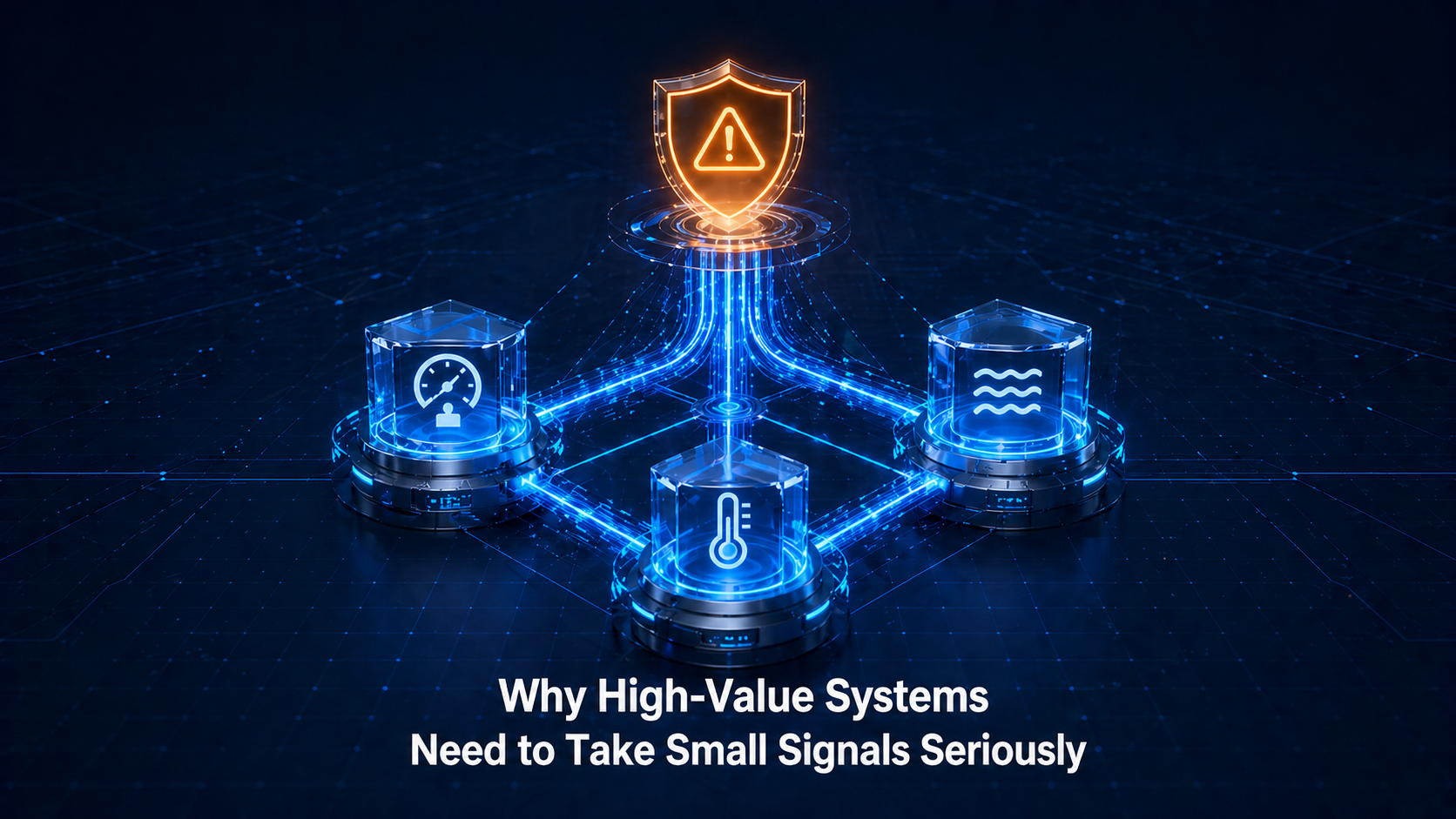
One clear characteristic of AI data centers is that the upper-layer equipment is extremely valuable and highly sensitive to continuous operation. In this context, the “small signals” in the field layer are no longer just auxiliary data. They are responsible for moving risk identification forward.
Pressure signals can reflect the health condition of the loop and help identify resistance changes, leakage trends, and pump-side abnormalities.
Flow signals can verify whether cooling capacity is actually being delivered to where it is needed, avoiding the misjudgment of “pressure exists, but effective flow does not.”
Temperature signals are used to verify the heat exchange result and determine whether the system is still operating within a stable range.
If these three types of information are separated from each other, the field side can only see fragmented data. But if they can be collected and understood in a unified way, many slow-developing risks can reveal their outline much earlier.
This is also the direction Sentinel has always emphasized in fluid detection applications. Around pressure detection, flow monitoring, temperature detection, and level detection, product design is not only intended to complete single-point measurement. It is also intended to help key field variables enter the control and monitoring system earlier, becoming a data foundation that can be judged, tracked, and maintained.
For liquid cooling systems, sensors are not only measuring components. They are also the starting point for establishing visibility and certainty at the field layer.
When Liquid Cooling Becomes Critical Infrastructure, the Field Layer Must Also Be Viewed from an Operational Perspective
Liquid cooling is no longer just an auxiliary system for heat dissipation. In the era of high computing power, it is gradually becoming an important infrastructure that affects system availability.
Once infrastructure moves into a critical position, the standards used to evaluate it also change. In the past, people cared about whether it was installed and whether it could run. In the future, more attention will be paid to whether it can remain stable over the long term, whether abnormalities can be located quickly, and whether consistent performance can be maintained under complex operating conditions.
This means the field layer can no longer be understood only from the perspective of “hardware installation.” It should be understood from the perspective of “operational capability.”
Pressure, flow, and temperature signals will increasingly take on the responsibility of helping systems detect abnormalities earlier, explain causes more clearly, and arrange maintenance more calmly.
Their value is not in proving where the problem occurred after a failure happens. Their value is in giving the system room for adjustment before the problem is amplified.
For an industrial automation company like Sentinel, this is exactly the layer where value can be created. The goal is not to replace chillers, pump units, or heat exchangers themselves, but to help clarify key variables at the liquid cooling field layer, build a solid data foundation, and make future maintenance and expansion more controllable.
As the industry moves further toward high value, high density, and high continuity, the role of this layer will become increasingly visible.
The Value of Sensors Integrated with IO-Link Is Not Just “Communication”
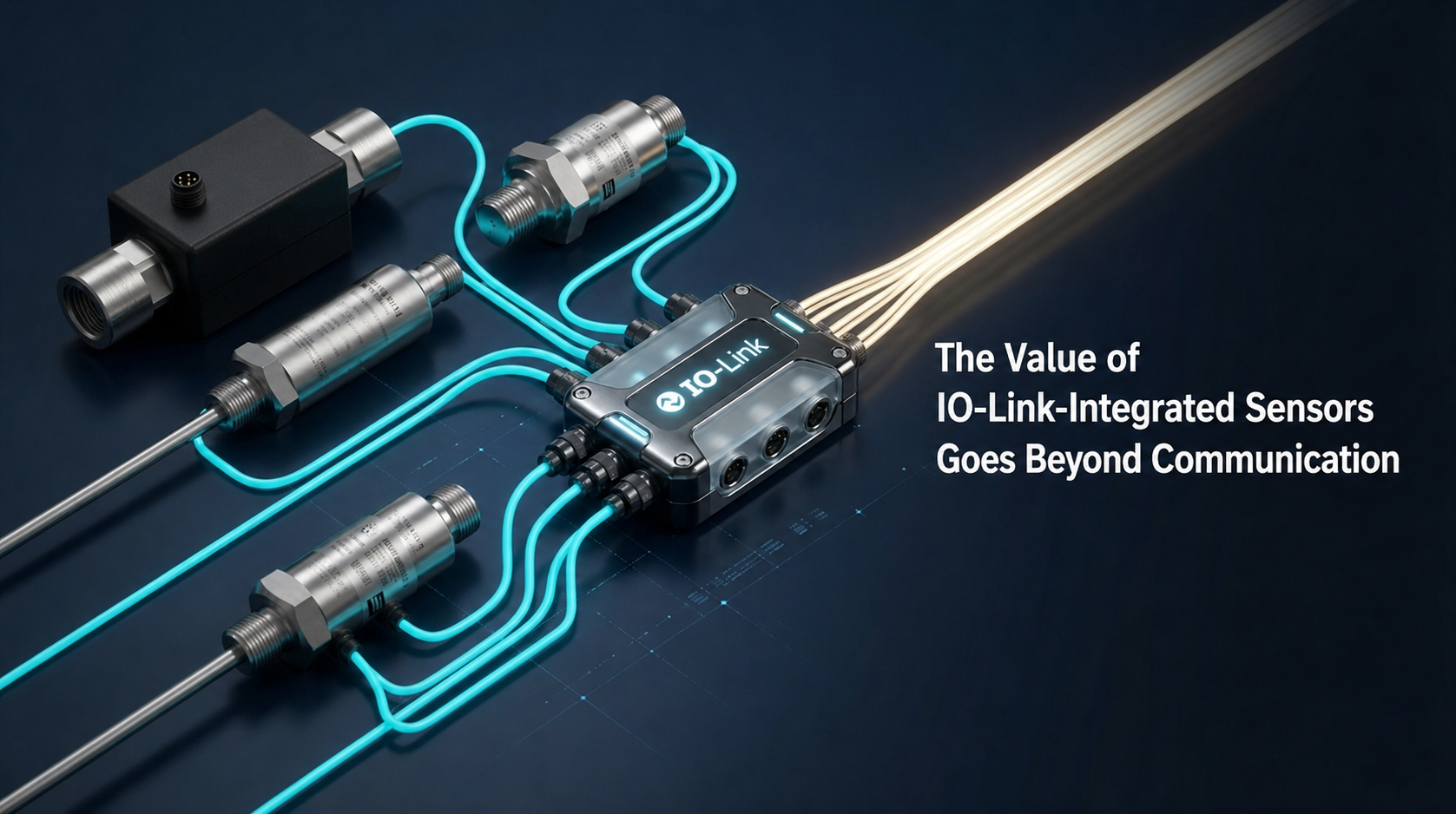
In liquid cooling systems, the real issue in many projects is not whether sensors are installed, but whether field data can enter the system in a more consistent and standardized way, while remaining controllable during future expansion, replacement, and maintenance.
Especially in high-computing-power scenarios, the number of measuring points will continue to increase as system complexity grows. The communication method and access efficiency of each sensor will also begin to affect the overall engineering experience.
Therefore, the value of sensors integrated with IO-Link should not be understood simply as “adding one more communication method.”
More importantly, IO-Link makes field-layer data expression more unified and allows key process variables to be more easily included in the same monitoring logic. For liquid cooling systems that require continuous observation and ongoing optimization, this consistency is valuable in itself.
From the perspective of engineering implementation, sensors with integrated IO-Link can help improve the standardization of field access and make future replacement, expansion, and maintenance easier.
For project owners, this means key variables can not only be seen, but also managed continuously. For operation and maintenance teams, it also means the field layer is not merely “collecting signals,” but providing a more stable data foundation for trend analysis, abnormality diagnosis, and strategy optimization.
From “Able to Run” to “Able to Operate”: The Underlying Logic of Liquid Cooling System Competition Has Changed
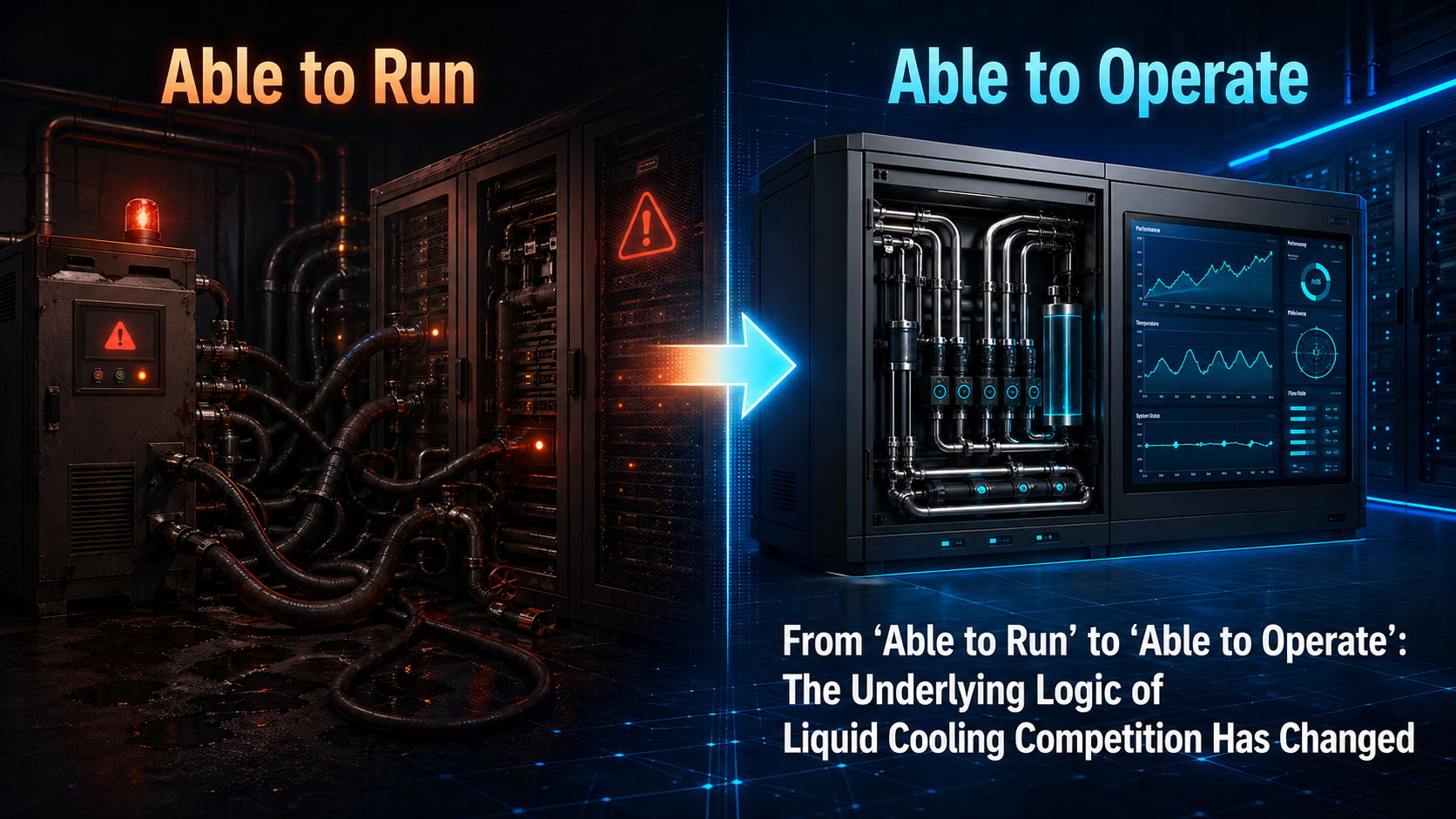
The construction boom of high-computing-power data centers appears to be a continuous upgrade of computing power investment. In essence, it is also forcing infrastructure capabilities to upgrade at the same time.
The role of liquid cooling systems is gradually shifting from “meeting heat dissipation requirements” to “ensuring system availability.”
For a liquid cooling system to truly take on this role, it cannot rely only on large equipment itself. It also depends on whether the field layer is visible enough, stable enough, and easy enough to maintain.
In many cases, what determines the long-term performance of a system is not the most expensive component, but the most basic, smallest, and most easily overlooked process signals.
If these signals can be sensed in time, collected stably, and understood continuously, many problems can be controlled before they expand. If these signals remain vague, fragmented, or missing for a long time, the system can only respond passively through alarms and experience.
This is why the liquid cooling field layer deserves to be discussed separately in the era of high computing power. It is no longer just one part of engineering support. It is helping liquid cooling systems truly move from “able to run” to “able to operate.”
Summary
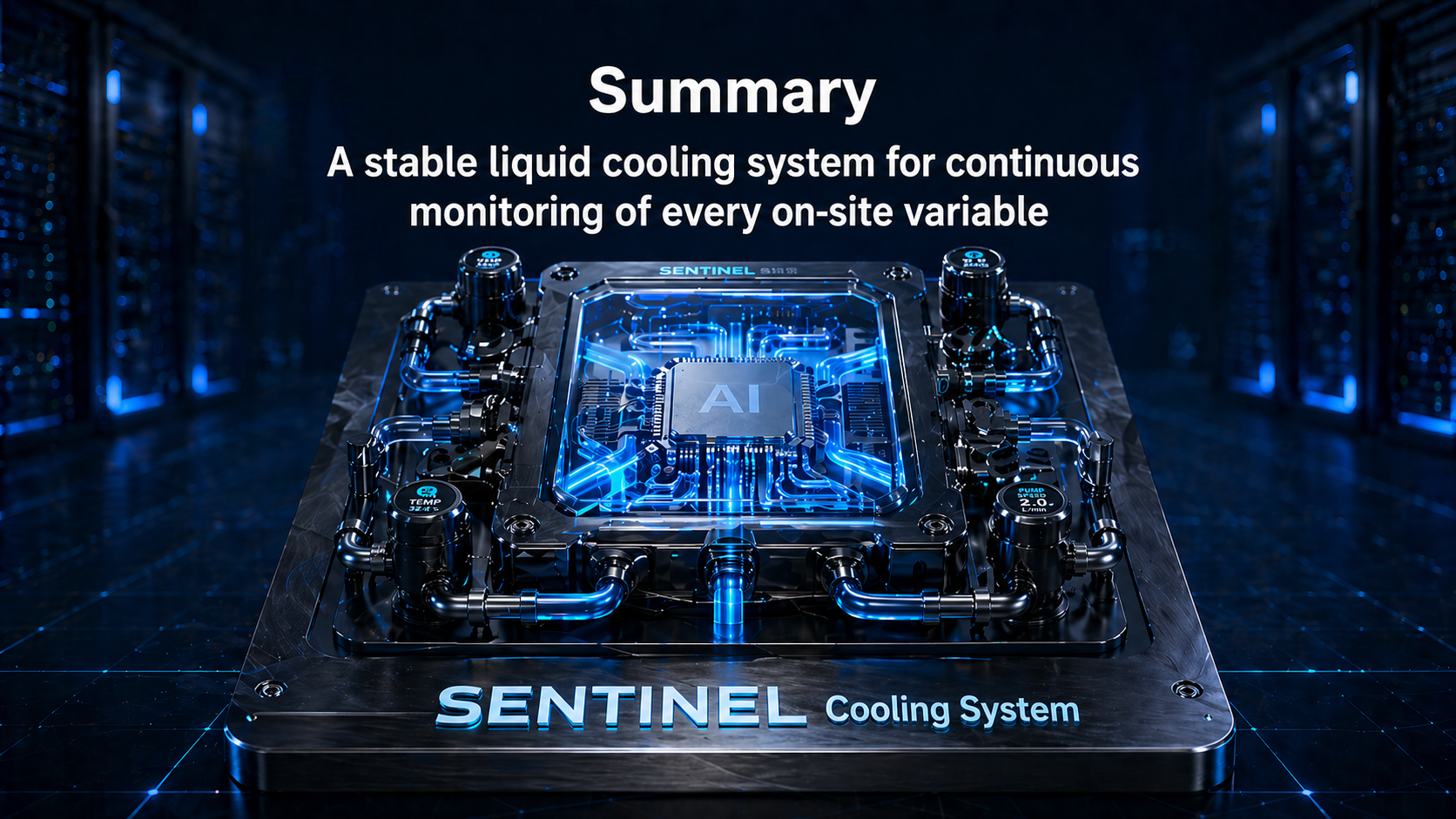
The more expensive an AI data center becomes, the more critical the liquid cooling field layer is.
As the value of upper-layer computing equipment continues to rise, the tolerance for interruptions and performance fluctuations becomes smaller and smaller. Any deviation that accumulates slowly may be rapidly amplified under high-load conditions.
A truly robust liquid cooling system should not only have heat dissipation capability. It should also have long-term observable, explainable, and maintainable operating capability.
What Sentinel aims to provide is not a concept that stays on paper. Starting from key variables such as pressure, flow, and temperature, Sentinel helps projects first establish the most basic and also the most important field sensing capability.
For liquid cooling systems, the earlier these key process variables can be continuously observed, the greater the chance of moving abnormality handling forward and keeping maintenance rhythm under control.
At the same time, Sentinel sensors with integrated IO-Link functionality also bring higher consistency and a better expansion foundation to the field layer. The value is not only in transmitting signals, but also in making key data easier to enter the system, enter trend analysis, and support operation and maintenance decisions.
In the era of high computing power, many system capabilities are not necessarily built from the most expensive equipment. They often begin from the most basic and most easily overlooked field layer.
If you are focusing on AI data center liquid cooling, CDU retrofitting, or field-layer monitoring for high-reliability fluid systems, we welcome discussions on loop structure, key measuring points, and application requirements.
Sentinel is willing to work with customers based on real application scenarios to make the liquid cooling field layer clearer, more robust, and better suited for long-term operation.
FAQ
1. Why is the field layer more important when AI data centers become more expensive?
Because the higher the system value and power density, the greater the cost of downtime and performance fluctuation. In this situation, small deviations at the field layer are no longer just local issues. They may directly affect the stability and maintainability of the entire liquid cooling system. The more expensive the system is, the more necessary it becomes to move risk identification forward and detect abnormalities before they develop into visible results.
2. Why can’t liquid cooling systems rely only on temperature alarms?
Temperature mainly reflects the result, not the cause. When a clear temperature abnormality appears, many problems have often already accumulated for a period of time. By combining pressure, flow, and temperature, the system can identify deviations earlier and move maintenance from passive troubleshooting to trend-based handling, giving the liquid cooling system stronger explainability.
3. What is the practical value of sensors with integrated IO-Link in this type of application?
The core value is to make field data acquisition more standardized and to make future expansion and maintenance more controllable. For liquid cooling systems where measuring points continue to increase and operating requirements keep rising, sensors with integrated IO-Link can improve the consistency of data access, reduce uncertainty during replacement and expansion, and make it easier to include key process variables in unified monitoring and trend analysis. The value is not only communication capability, but also field management capability for long-term operation.
Customer Support and Service
Tianjin Sentinel Electronics has been deeply engaged in the field of industrial automation for 17 years and has provided more than 170 application cases for industries such as rail transit, automotive manufacturing, and new energy.
We provide full-cycle services covering sensor selection, system integration, and after-sales diagnosis. If you would like to learn more about Sentinel products, please contact our sales team or call us at 022-83726972. You can also visit our official website at www.sentinel-china.com.
You are welcome to schedule an online demonstration or apply for sample testing. Our engineers can help you customize a complete solution from “data acquisition” to “action execution.”