Introduction
In many cooling circuits, liquid cooling systems, and equipment thermal management scenarios, field troubleshooting often starts with one signal: whether the pump has started. A running pump means the system has a power source, but it does not directly prove that the cooling medium is flowing stably and sufficiently through the key locations. What truly affects the stability of equipment temperature is often the relationship among pressure, flow, and temperature signals.
Why Problems Still Occur After the Pump Has Started
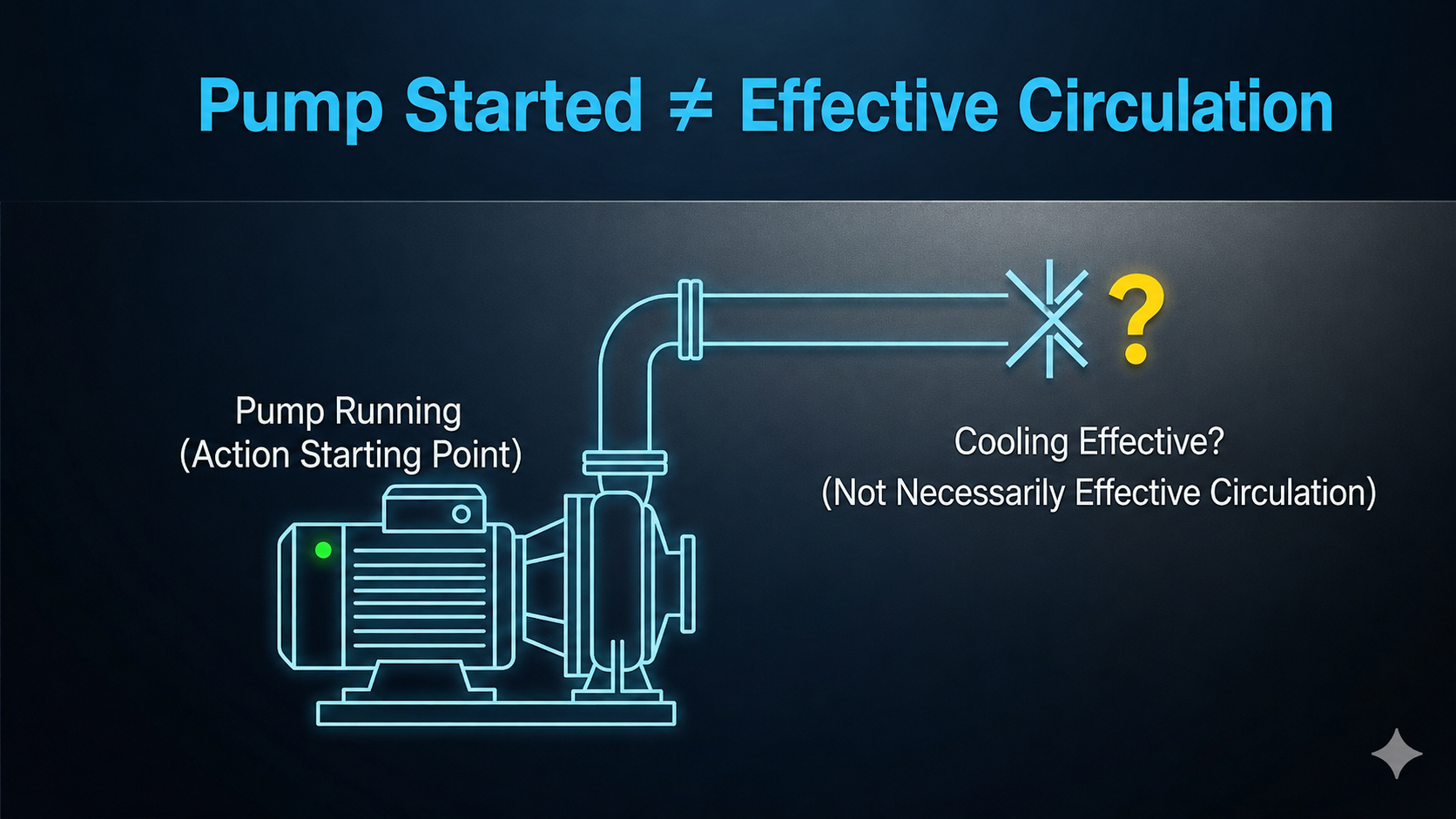
At equipment sites, a seemingly contradictory situation often occurs: the pump has started, the motor is running, and there is even a certain level of pressure in the pipeline, yet the equipment temperature still cannot be reduced, or a temperature alarm appears again after a period of operation. For maintenance personnel, this type of problem is often difficult to judge because the surface conditions do not appear obviously abnormal.
The issue is that pump startup is only an action status and does not mean that effective circulation has been established. It only indicates that the power source has started working, but it does not confirm whether the cooling medium is actually flowing through the target branch, whether the flow rate is sufficient, or whether the heat exchange result is stable.
In a cooling circuit, the pump, pipelines, valves, filters, heat exchangers, branches, and terminal equipment together form a complete system. Any blockage, bypass, leakage, air lock, abnormal valve position, or decline in heat exchange efficiency in any part of the system may create a gap between “pump running” and “effective cooling.”
This is why troubleshooting based only on pump status can lead the site in the wrong direction. Pump startup can serve as the starting point for judgment, but it should not be the endpoint. To confirm whether the cooling circulation is truly effective, pressure, flow, and temperature must also be checked.
Normal Pressure Does Not Mean the Cooling Medium Has Truly Reached the Key Position
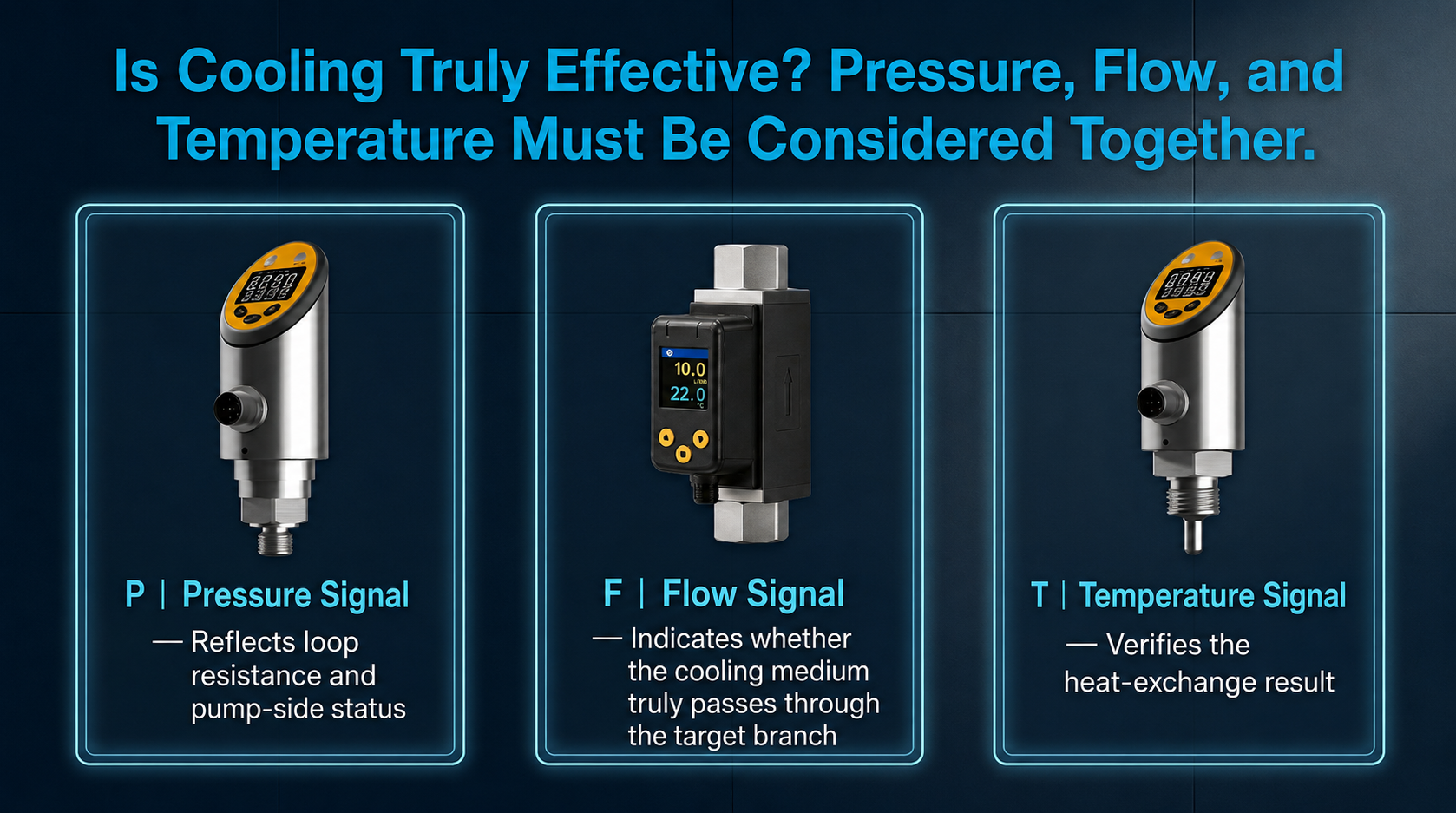
Pressure signals are very important in cooling circuits. They can help determine pipeline resistance, pump-side status, filter blockage trends, and certain leakage risks. Especially after long-term equipment operation, pressure changes often reflect changes in the health condition of the circuit.
However, pressure also has its limits. Pressure represents the force condition at a specific measuring point and is not directly equal to the effective amount of medium passing through the target branch. In other words, pressure at a certain position does not mean that the cooling medium has flowed through the actual cooling point at the proper flow rate.
For example, when a filter or narrow pipe section becomes blocked, the pressure upstream of the blockage may rise, while the downstream flow rate decreases. In another case, if a branch valve is not fully open, the main pipeline pressure may look normal, while the terminal equipment actually receives insufficient cooling medium. At this point, if only pressure is observed, it is easy to mistake “local pressure exists” for “the whole circuit is circulating effectively.”
Therefore, a pressure sensor is more suitable for answering questions such as whether circuit resistance has changed and whether the pump side or pipeline status is abnormal. It is an important entry point for troubleshooting cooling system problems, but it should not be the only basis for judgment.
“Key Point
Pump startup means the system has started to act, and pressure indicates a force condition at the measuring point. But whether cooling is truly effective still requires confirmation of whether the flow is sufficient and whether the temperature remains stable.
Flow Signals Answer Another Question: Has the Cooling Capacity Been Delivered?
Compared with pressure, flow signals are closer to another key question in a cooling circuit: whether the cooling medium has actually passed through the target position. For machine tool cooling, liquid cooling systems, battery production equipment, heat exchange circuits, and other thermal management scenarios, whether the cooling capacity can be delivered is often more important than whether the pump has acted.
When the flow is insufficient, the equipment may still operate for a short period of time, but heat cannot be carried away, and the temperature will gradually rise. This process may not immediately appear as a pump alarm, nor will it necessarily show up right away as a pressure abnormality. By the time a temperature alarm occurs, the site has often already entered the result stage, making troubleshooting more difficult.
The value of a flow sensor is that it turns the question of “whether it has flowed through” from an experience-based judgment into visible data. Especially in multi-branch cooling, critical component cooling, or equipment with frequently changing operating conditions, flow signals can help maintenance personnel detect clues of insufficient circulation, branch abnormalities, or declining heat exchange efficiency earlier.
SENTINEL vortex flow sensors can be used to monitor pipeline flow and can also combine temperature information to help the site understand the medium status. For equipment manufacturers, these signals are not only used for alarms but also for commissioning, acceptance inspection, maintenance, and later fault tracing.
Temperature Signals Are Result Verification and Should Not Be Judged in Isolation
Temperature signals are usually the most intuitive result at the site. Rising equipment temperature, abnormal cooling liquid temperature, or an insignificant temperature difference after heat exchange will quickly alert maintenance personnel that the system may have a problem. However, temperature itself mainly reflects the result and does not necessarily point directly to the cause.
The same symptom of temperature failing to drop may be caused by completely different reasons. It may be insufficient flow, where the cooling medium does not fully pass through the target position. It may also be abnormal pressure, causing a change in resistance in a section of the circuit. Other possible causes include reduced heat exchanger efficiency, changes in ambient temperature, a sudden increase in load, or unreasonable temperature measuring point placement.
If only temperature is observed, the site can easily fall into a situation where “the result is already abnormal, but the cause is unclear.” A more reliable approach is to treat temperature as the result verification signal, and then combine pressure and flow to determine whether the process is normal.
SENTINEL IO-Link temperature sensors and transmitters can be used for temperature monitoring at key points. For equipment that needs long-term stable operation, temperature data should not exist in isolation. It should work together with process signals such as pressure and flow to form a judgment chain.
Pressure Signal
Reflects circuit resistance and pump-side status, helping identify trends such as blockage, leakage, and abnormal valve positions.
Flow Signal
Determines whether the cooling medium has truly passed through the target branch, avoiding the misjudgment that “the pump has started, but circulation is insufficient.”
Temperature Signal
Verifies the heat exchange result and determines whether the equipment remains within a stable operating range.
Only by Looking at All Three Signals Can Troubleshooting Get Closer to the Real Site Conditions
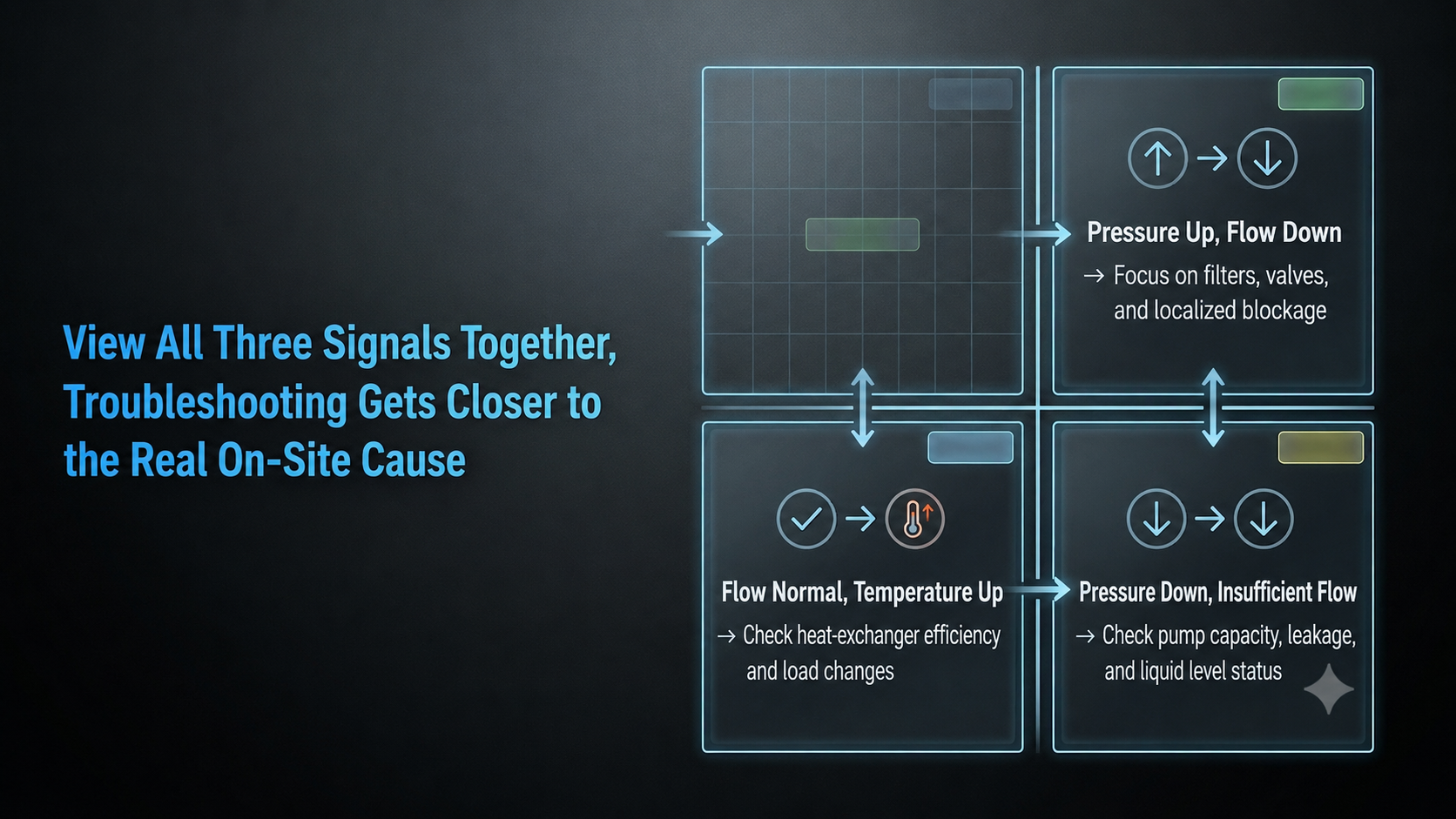
In actual troubleshooting, pressure, flow, and temperature rarely change in isolation. What is more valuable is to observe the combined relationship among them.
If pressure rises while flow decreases, the site should focus on filters, valves, narrow pipe sections, or local blockages. If pressure drops and flow is insufficient, the pump capacity, leakage, suction-side problems, or liquid level status may need to be checked. If the flow seems normal but the temperature continues to rise, further analysis is needed on heat exchanger efficiency, load changes, medium temperature, and temperature measuring point position.
This judgment method is not complicated, but it requires the site to have data from several key measuring points. Looking only at pump operation shows the action. Looking only at pressure shows the local status. Looking only at temperature shows the result. Only by combining all three types of signals can the real operating process of the cooling circuit be understood more accurately.
For equipment manufacturers, this approach has another practical value: it turns after-sales troubleshooting from “experience-based descriptions from the site” into “data-based review.” When a customer reports abnormal equipment temperature, if the system can provide historical changes in pressure, flow, and temperature, engineers can determine the problem range more quickly instead of repeatedly checking the pump, valves, and pipelines.
How SENTINEL Helps Equipment Manufacturers Build a Clearer Entry Point for Circulation Monitoring
Monitoring a cooling circuit does not necessarily need to be complicated from the beginning. A more practical approach is to first establish the key judgment points so that the site can clearly see whether the system is truly circulating effectively.
In this process, pressure sensors can be installed at the pump outlet, before and after filters, or on key pipe sections to observe pipeline resistance and pump-side status. Flow sensors can be used on key branches or main pipelines to confirm whether the cooling medium reaches the expected flow rate. Temperature sensors can be installed before and after heat exchange, or at equipment inlet and outlet positions, to verify the final cooling effect.
If the equipment needs to connect multi-point data to a PLC or upper-level system, IO-Link masters, IO-Link Hubs, and remote I/O modules can help the site complete sensor data acquisition and status access. For equipment manufacturers, this not only reduces uncertainty during commissioning and troubleshooting but also helps form a more standardized delivery solution.
More importantly, when pressure, flow, and temperature data can be collected reliably, the cooling circuit is no longer judged simply by “whether the pump has started.” Instead, it can gradually form an operating status that is monitorable, traceable, and maintainable.
Turn “Action Signals” into “Process Judgment”
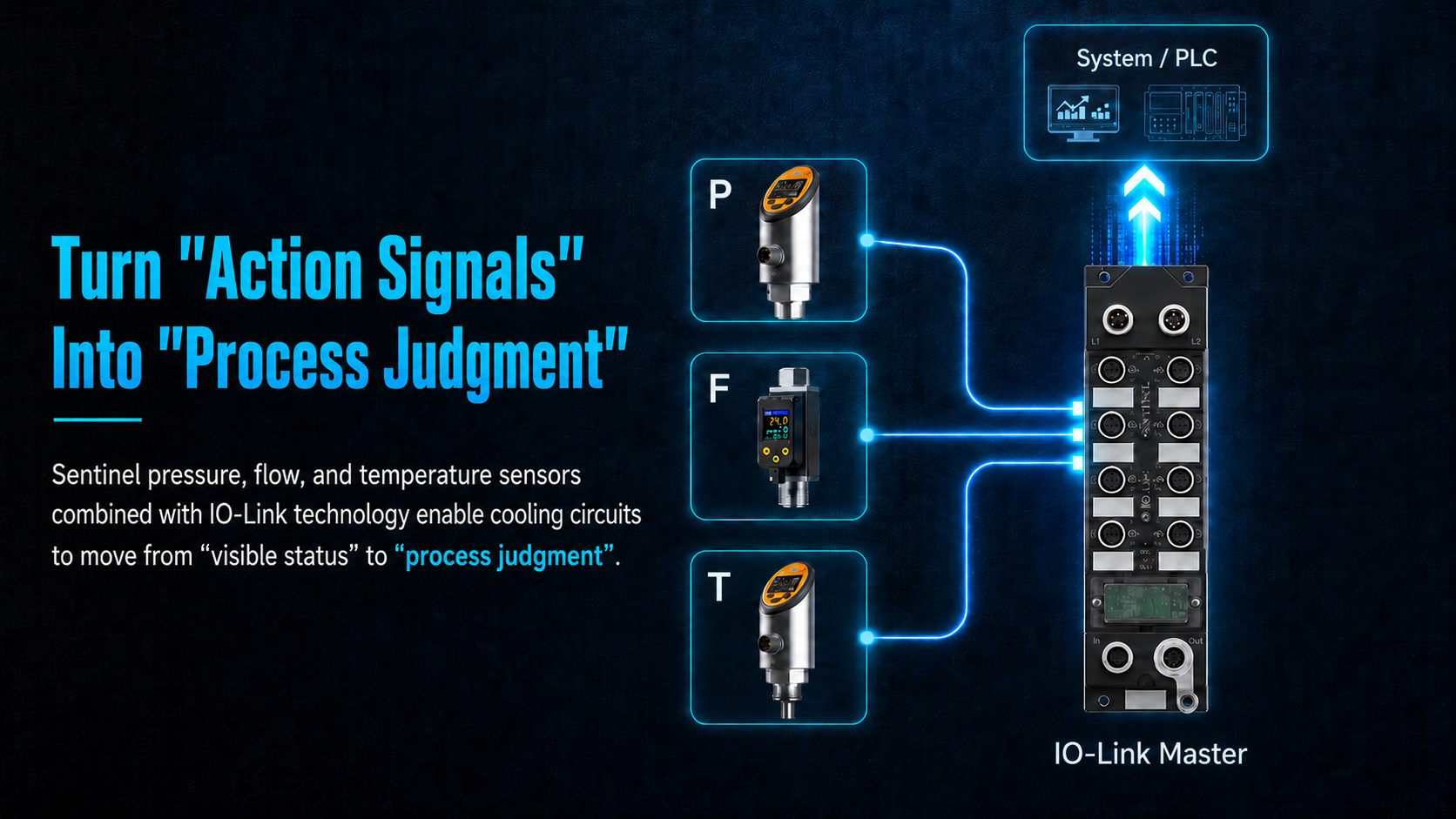
The problem with many cooling systems is not that the site has no signals, but that the signals have not formed a judgment relationship. Pump startup, valve switching, and pressure presence are all important, but they are more related to actions or local status. What truly determines whether equipment cooling is stable is whether the medium flows as expected and whether heat is continuously carried away.
So when the site again encounters the problem of “the pump has clearly started, but the temperature is still abnormal,” it is worth moving the troubleshooting sequence one step forward: first confirm whether the pressure is abnormal, then confirm whether the flow is sufficient, and finally use temperature to verify the heat exchange result. The judgment obtained in this way is often more reliable than looking at any single signal alone.
▣Article Summary
Pump startup does not equal effective circulation, and normal pressure does not mean the cooling medium has truly reached the key position. Stable operation of a cooling circuit requires attention to pressure, flow, and temperature signals at the same time.
SENTINEL pressure sensors, vortex flow sensors, temperature sensors, IO-Link masters, IO-Link Hubs, and other products can help equipment manufacturers move cooling circuits from “visible status” to “process judgment,” providing a clearer data foundation for commissioning, maintenance, and after-sales troubleshooting.
FAQ
1. The pump has already started. Why is it still necessary to check the flow?
Because pump startup only means that the power source has started working. It does not prove that the cooling medium has passed stably through the target branch. Flow signals can help confirm whether the cooling capacity has truly been delivered to the required position.
2. What does a pressure sensor mainly monitor in a cooling circuit?
A pressure sensor is mainly used to observe pipeline resistance, pump-side status, blockage trends, leakage risks, and abnormal valve positions. It is an important entry point for site troubleshooting, but it should be combined with flow and temperature for judgment.
3. Does abnormal temperature always mean insufficient cooling capacity?
Not necessarily. Abnormal temperature may be caused by insufficient flow, abnormal pressure, reduced heat exchange efficiency, load changes, environmental changes, or unreasonable measuring point placement. Pressure, flow, and temperature should be analyzed together.
Customer Support and Service
Tianjin Sentinel Electronics has been deeply engaged in the industrial automation field for 17 years and has provided more than 170 application cases for industries such as rail transit, automotive manufacturing, and new energy. We provide full-cycle services from sensor selection and system integration to after-sales diagnosis. To learn more about SENTINEL products, please contact our sales team or call us at 022-83726972. You may also visit SENTINEL’s official website at www.sentinel-china.com.
You are welcome to book an online demonstration or apply for a sample trial, and let our engineers customize a complete solution for you from “data entry” to “action implementation.”